How Remote Hydraulic Control Can Simplify Pump Station Maintenance
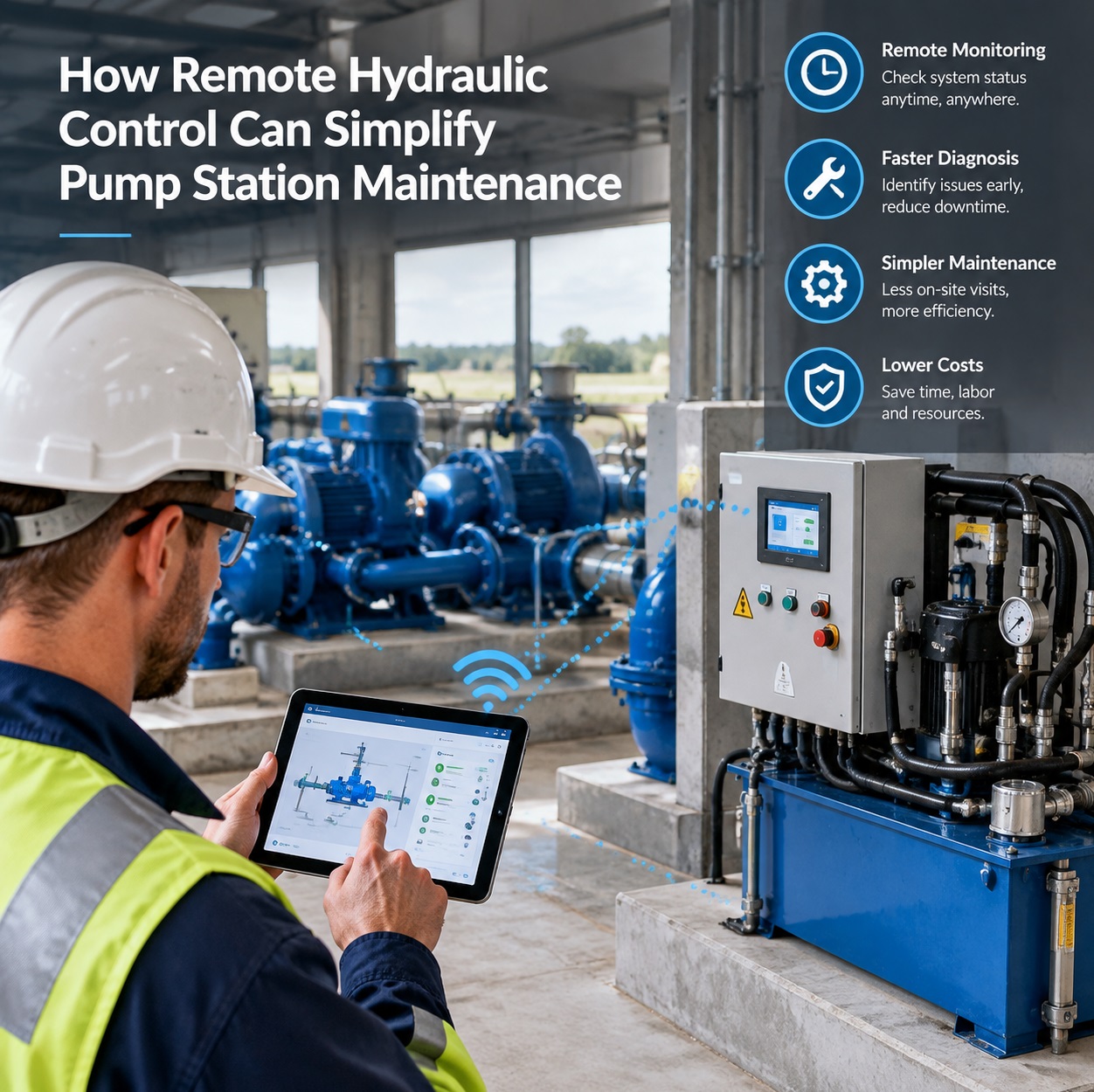 A pump station doesn’t fail politely. It fails at 2 a.m., on a holiday, in the rain, twenty minutes down a gravel road. The alarm hits the phone, the pressure trend goes sideways, and someone has to decide whether to send a crew or gamble on waiting until morning. Remote hydraulic control does not make pumps immortal. It does something almost as useful: it takes the guesswork and the windshield time out of a long list of maintenance calls.
Hydraulic control has always been dependable for moving valves, adjusting flow, and holding pressure in tough conditions. The problem has been access. If the actuator is at a remote station, someone has to physically go there to see what is happening, change a setting, or confirm that a command actually landed. Remote hydraulic control puts those actuators, pressure readings, position feedback, and alarm points on a network. Operators can monitor and adjust from a control room, a laptop, or a tablet. Maintenance teams stop treating every minor issue like a road trip.
The first simplification is access. A sticky valve, drifting pressure, or actuator that will not stroke fully used to require a site visit just to diagnose. With remote monitoring, you can see position feedback, hydraulic pressure, command status, and alarms before anyone leaves the shop. Sometimes the fix is a setpoint change or a reset. Sometimes you learn the problem is electrical, not hydraulic, and you send the right person with the right parts. That one detail can turn a four-hour service call into a fifteen-minute remote correction.
Troubleshooting gets faster, too. Remote hydraulic control systems can log pressure curves, stroke times, command history, and alarm events. Instead of guessing why a valve is sluggish, a technician can compare today’s stroke time to last month’s. They can see whether a filter is clogging, a pump is weakening, or a valve is dragging. That is the difference between reactive maintenance and planned maintenance. The station tells you what it needs before it becomes an emergency.
Safety improves in ways that are easy to underestimate. High-pressure hydraulic systems, heavy actuators, and remote pump stations are not places for unnecessary exposure. Remote control lets operators test sequences, isolate equipment, and verify conditions before a crew arrives. Technicians show up knowing what to expect, what tools to bring, and whether the system is safe to work on. That reduces the chance of surprise pressure releases, unexpected movement, and the kind of rushed decisions that happen when someone is trying to finish a job before dark.
Fewer unnecessary site visits add up quickly. A maintenance tech’s day is finite. Every hour spent driving is an hour not spent rebuilding a pump, changing oil, inspecting seals, or tightening a flange. Remote hydraulic control lets teams batch work. They fix what needs fixing when they are already there, instead of scattering trips across the map for every alarm and adjustment. For utilities, wastewater lift stations, oil and gas gathering sites, irrigation networks, and industrial plants with scattered assets, that shift alone can justify the investment.
Consistency is another quiet benefit. When every adjustment requires a manual visit, setpoints drift. One operator leaves a valve slightly open. Another changes a pressure setting and forgets to log it. Remote hydraulic control keeps commands and feedback in one system. You can see who changed what, when, and why. Audit trails become cleaner. Shift handovers get easier. The station behaves the same way on Tuesday afternoon as it did on Saturday night.
The data also feeds better planning. Trends reveal degradation before failure. A slowly increasing stroke time, a rising hydraulic fluid temperature, or a pressure curve that no longer matches the baseline can trigger a work order at the right moment. That means replacing a seal before it blows, scheduling a fluid change based on condition instead of a calendar, and keeping critical spares on the shelf because you know what is likely to fail next. Remote hydraulic control does not just simplify maintenance. It makes maintenance smarter.
Where does it pay off fastest? Remote sites with no permanent staff. Stations that are too numerous to watch closely. Systems where a single failure creates a regulatory headache, a production stoppage, or a public service interruption. If your crews spend more time driving than turning wrenches, remote hydraulic control is not a gadget. It is a labor multiplier.
What should you look for in a system? Local manual override is non-negotiable. If the network goes down, your team still needs to run the station. Clear diagnostics matter more than a pretty dashboard. Open protocols help the system fit your existing SCADA or telemetry setup. Cybersecurity cannot be an afterthought. And training should be part of the package. The best remote hydraulic control systems do not ask maintenance teams to become IT departments. They make the maintenance job more direct, not more complicated.
Remote hydraulic control will not replace a solid preventive maintenance program. It makes that program sharper. It turns a 3 a.m. emergency into a screen check, a remote adjustment, and a planned visit. It turns a scattered network of pump stations into a system you can actually see, test, and manage. For stations that are remote, unmanned, or simply too many to chase, that is not a luxury. It is how you keep water moving, process running, and crews off the road.